Sedatives may slow recovery from trauma - health - 01 October 2009 - New Scientist
Shared via AddThis
Thursday, October 1, 2009


Wednesday, August 26, 2009
The National Resource Directory
"The National Resource Directory (NRD) is an online tool for wounded, ill and injured Service Members, Veterans, their families, and those who support them. The NRD provides access to more than 11,000 services and resources at the national, state and local levels that support recovery, rehabilitation and community reintegration.
Maintained by the Departments of Defense, Labor and Veterans Affairs, the NRD links to federal and state government agencies; Veterans service and benefit organizations; non-profit and community-based organizations; academic institutions and professional associations who provide assistance to wounded warriors and their families."
Maintained by the Departments of Defense, Labor and Veterans Affairs, the NRD links to federal and state government agencies; Veterans service and benefit organizations; non-profit and community-based organizations; academic institutions and professional associations who provide assistance to wounded warriors and their families."

Thursday, August 20, 2009
Mental Stress Training Is Planned for U.S. Soldiers

D. Myles Cullen/U.S. Army
At a recent training session in Philadelphia, Sgt. First Class James Cole and other soldiers participated in role-playing and learned mental fitness techniques intended to help them in combat.
The training, the first of its kind in the military, is meant to improve performance in combat and head off the mental health problems, including depression, post-traumatic stress disorder and suicide, that plague about one-fifth of troops returning from Afghanistan and Iraq.
Active-duty soldiers, reservists and members of the National Guard will receive the training, which will also be available to their family members and to civilian employees.
The new program is to be introduced at two bases in October and phased in gradually throughout the service, starting in basic training. It is modeled on techniques that have been tested mainly in middle schools. (read more)
35 Tried and True Ways to Keep Your Sanity While He’s Deployed
35 Tried and True Ways to Keep Your Sanity While He’s Deployed
posted on March 05, 2009 14:04
By Janet Farley
Maybe you’ve been there, done that and earned a number of deployment t-shirts already. Perhaps not. In any event, a little inspiration designed to see one through the long haul never hurts. Use and abuse the following tips, not listed in any particular order of importance, to help you make that the time in between the times that matter the most to you go by just a little faster.
Janet Farley, Ed.M Freelance writer specializing in Careers & Workplace Issues Author, The Military Spouse's Complete Guide to Career Success (Impact Publications, Jan 2008) and The Military-to-Civilian Career Transition Guide (Jist Inc). Visit my website at www.janetfarley.com
posted on March 05, 2009 14:04
By Janet Farley
Maybe you’ve been there, done that and earned a number of deployment t-shirts already. Perhaps not. In any event, a little inspiration designed to see one through the long haul never hurts. Use and abuse the following tips, not listed in any particular order of importance, to help you make that the time in between the times that matter the most to you go by just a little faster.
Be a joiner in your unit’s family readiness group. There, you will not only find the support and friendship of others sharing the same experience, but you will also be among the first to learn of any noteworthy news.
Enroll in a certificate or degree program. You will not only keep busy with the books but you will be making yourself more marketable for the future as well. Research military spouse-specific scholarships and grants to defray the cost.
Perfect the art of rollerblading. Or quilting. Or antiquing. Try whatever you think may bring you inner happiness and do it shamelessly.
Train to run a marathon or walk around the mall five times.
Lose that last 10 pounds once and for all. And just in time for homecoming.
Befriend the new girl in the unit. She needs it.
Go shopping but don’t go crazy shopping. You don’t need more debt.
Try on a new haircut or color for a change.
Be an everyday hero by volunteering to help out in your community.
Email your loved one every day. Tell him how much you love him, miss him and can’t wait for him to come home.
Avoid sequestering yourself away from the general public. It’ll just bring you down.
Ask for help when you need it and know that everyone needs it sometimes.
Don’t overbook yourself in the name of keeping busy. You’ll only stress yourself out more.
Just breathe. Breathing is good. In. Out. In. Out. Lower that heart rate and repeat “this too shall pass.”
Plan a girl’s night out and make enjoying yourself the number one priority.
Take up that a new hobby.
Live your life and avoid sitting by the phone in hopes of his call. He will call. You may be there, or you may not, but he will call again.
Make a care package and send to your sweetheart. Include gifts, letters and pictures from his darling offspring.
Read the classics or get your fill of mindless junk, whichever works for you.
Rent and watch every chick flick you’ve ever wanted to, but haven’t seen yet.
Resist the urge to move back home with your parents. Visit them instead. It will make everyone happier in the long run.
Plan a trip to someplace you’ve always wanted to go and do it.
Get a new job or get yourself promoted on your old one.
Keep your sweetie in everyone's thoughts and conversations daily even if he can't be there in person.
Don’t be a news junkie. It will just make you crazy.
Save money towards a particular goal for your family or just for the two of you.
Send him a spicy letter with a one redeemable coupon for _________ (you fill in the blank).
Do something nice for yourself once a week without fail. Have your nails done. Get a massage. Splurge on a pedicure. Eat out a nice restaurant. You deserve it.
Focus on your kids if you have them. They need the most now.
Accept that some days will just suck, some worse than others, and get on with it.
If you don’t live near an installation and think everyone around you is clueless about life in the military, clue them in.
Start a journal and faithfully record your thoughts, feelings, fears and joys.
Create a countdown calendar and enjoy seeing each day pass that brings you closer. This might be especially helpful for younger children who don’t quite have a grasp on the concept of time.
Accept that he won’t always sound happy when you do hear from him.
Janet Farley, Ed.M Freelance writer specializing in Careers & Workplace Issues Author, The Military Spouse's Complete Guide to Career Success (Impact Publications, Jan 2008) and The Military-to-Civilian Career Transition Guide (Jist Inc). Visit my website at www.janetfarley.com
Saturday, June 27, 2009
The latest news on post traumatic stress disorder, American troops, effects of the war - PTSD NewsLadder
The latest news on post traumatic stress disorder, American troops, effects of the war - PTSD NewsLadder
A collection of reports and projects... good stuff here.
A collection of reports and projects... good stuff here.
Saturday, June 6, 2009
War is Hell
This was published in the Oregonian's Iraq War blog and it is deeply moving. As I read this tears fell down my face. My heart aches for the men and family left behind, at the great loss that they feel. It would do well for those who so casually want to commit us to a war, or to so casually throw out phrases like 'withdraw' or 'pull out' to try to imagine what it feels like to be the soldiers in this piece. Our sacrifices are so very great. Remember this on Memorial Day before you go to your shopping spree or cookout.
War is hell
Posted by Stalker15A, via Mike Francis, The Oregonian June
02, 2009 14:56PM
Categories: Iraq military operations
On Friday our patrol got hit. An insurgent threw a grenade into one of our patrol vehicles. I helped the rest of my guys carry my roommate to the CSH (Combat Support Hospital) here in Mosul in a black body bag. As we took the body out of the Stryker vehicle our uniforms and boots became stained with blood comingled with tears for our buddy. Our steps were slow and deliberate, blood seeping out the bag as we walked. No one talked. There was no need. We placed the remains on a cold metal table. I turned to my guys and I told them "Remember this feeling"..then we started filing out. The bigwigs had started arriving to have their "look see" and quite frankly I was not in the mood for their dog and pony show. Our platoon consists of thirty men. We lost three that day. My roommate was fatally wounded..the team medic will never return to military service (amputee) and the gunner will most likely not return to military service (reconstructive facial surgeries).
We walked back to the transport vehicle and began hosing down the blood. As I watched it seep into the ground, I became acutely aware that tears were streaming down all our faces although there was no audible sounds emanating from us. We have been down this road before. We are well aware of our own mortality. The putrid acrid smell of burnt human flesh permeates our vehicles and clothes. My heart bleeds and my soul hides. A Doc comes out to tell us that our gunner is conscious and alert. We race inside to see him. We are not prepared for the sight. There are tubes in various orifices. His face is unrecognizable. His jaw and multiple facial bones are broken. His eyes are almost swollen shut. Yet he manages a smilewhich exposes the carnage in his mouth. Most of his teeth are broken or completely gone. His bottom lip is split wide open exposing a few more remaining teeth. We huddle at his bedside touching whatever body part we could..telling him that we were there..that the only thing to focus on now is getting better. They give him the purple heart. The tears flow freely again mixed with a few sobs and expletives. We are asked to leave so he can rest. I inquire about our team medic. They told us he was still in surgery..that they were doing everything they could to save his leg. We return to our vehicles. The chaplain comes out and offers us water and words of consolation. I am in a daze but I clearly hear words like God and hero and sacrifice. The platoon is not in the mood to hear anything religious. We need our space to think and grieve. He prays and walks away. We sit and wait. A nurse comes out to tell us that the team medic is out of surgery and heavily sedated. They managed to keep his leg attached for now and it is covered in a mound of bandages with blood seeping through. He briefly opens his eyes, scans the room to acknowledge everyone, then closes them again. We stand in silence. He opens his eyes again and asks why we were all staring at him. We have no answers. Someone yells "It's because your nipples are exposed"..(his hospital gown had fallen down off his shoulders). The feeble attempt at humor works for a brief second. He smiles..we smile. Then he asks about the other guys. The tears flow freely once again. We tell him to rest and begin filing out of the room. We drive back to our living areas. Those that have the stomach to eat do so. Most of us huddle outside. I go into the room. His laptop is still open..unfinished letter to his Mom..on his bed...dirty laundry strewn across the room. The reality is sobering. He is gone. Members of other platoons start arriving to pay their respects and offer condolences. People started punching and kicking things. There was a lot of cussing and enough tears to fill a bucket. Someone said we should get clean. We had a ramp ceremony (where we bring the casket to the plane) in a few hours. No one moved.
A few hours later we were back at the CSH. There were two planes on the runway. One had soldiers returning from leave and new soldiers arriving to the unit. The look on their faces told us this was not the welcome they expected. The FLA (dont know the meaning of the acronym) drove the body onto the tarmac flanked by two of our guntrucks. We marched out and removed the casket. It was adorned with the bronze star, the purple heart, and the CIB. The CIB, combat infantry man's badge, is issued to an infantryman for taking and returning fire during combat operations. My roommate returned from leave on April 16. We got into a firefight the very next day, April 17, in the Ras Al Koor neighborhood. This was his first firefight and therefore made him eligible for the CIB. I wrote his recommendation after that incident and he was due to get the coveted CIB very soon. He was looking forward to pinning it on his uniform and I was now looking at it pinned on his casket. The tears flowed behind our military issued sunglasses as we carried his body slowly to the aircraft. The casket was mettalic in nature and extremely cold due to the material used to preserve the body during shipment. The airfield was a sea of people rendering final salute as we walked by. We placed him in the belly of the airplane and rendered our final salute. I ran my hand the full length of the coffin..caressing the flag..whispering that if he could hear me.. I loved him and I missed him. The chaplains and Battalion Commanders gave their speeches. We hugged and cried. We marched off that plane with the entire battalion behind us. I paused briefly to look at the lonely casket sitting on the ramp of the airplane. We drove back in silence to our living quarters.
A few hours later we were back at the airfield. We carried our team medic to his plane pretty much in the same fashion we carried the coffin a few hours earlier. He was on his way to Landstuhl Germany for treatment. We shook hands and saluted as he flew off.
We never got to see our gunner leave. Sometime during the night he was flown to Balad Iraq to catch a follow on flight back to the states. We were pissed. I guess command thought that we had a pretty long day and needed the rest. What we NEEDED was to send our boys off the right way.
Saturday we mulled around for the better part of the day. Recovery guys came and inventoried his property and took it all away in large black tote boxes. I asked them to leave the pictures up that he put on the walls. They comply. The room is much emptier. I stare at the walls and the ceiling. Sleep does not come easily but it finally does.
I am awakened a few hours later by members of the squad for a mandatory debrief. The Combat Stress Team is here asking "How does that make you feel?" type questions. They say they KNOW how we are feeling and we need to talk it out...we politely tell them to go away. When they leave..we open up to each other..we laugh..we cry..we talk about our buddies. We keep the memories between us..no one else understands the bond..the unit cohesion..the love we have for each other.
A few minutes later we get word. We are tasked with a mission. Less than 36 hours have passed since the incident. We lace up our boots, don euipment, and race to our vehicles. Work beckons...we will grieve later. The war machine grinds on..and we..we are the cogs in the wheel. I do one final check of my guys..we lock and load..and prepare to walk through the valley of the shadow of death.
Wednesday, June 3, 2009
For Soldiers, Stress After War May Be the Biggest Enemy
by Karen LeighJune 03, 2009
Insurgents are stealthy fighters, their attacks unexpected, startling and violent.
Combined with the stress of longer deployments, loneliness and brutal desert conditions, they are the perfect trigger for Post-Traumatic Stress Disorder.
Soldiers now returning from Iraq and Afghanistan are experiencing the highest levels of PTSD since the Vietnam War. Some just have trouble sleeping. Some find themselves emotionally numb or easily startled. In the most extreme cases, soldiers have killed themselves – and fellow soldiers. The nonprofit aid organization Veterans for Common Sense said that as of December 15, 2008, the U.S. Department of Veterans Affairs, or VA, had diagnosed 115,000 Iraq and Afghanistan vets with PTSD.
“These are staggering numbers,” said VCS executive director Paul Sullivan. “We can either admit that there’s a very serious problem and begin treatment, or we can ignore the problem and wait until the PTSD turns into unemployment, drug use, and suicide – very expensive social problems.”
The National Institute of Mental Health defines PTSD as “an anxiety disorder that can develop after exposure to a terrifying event or ordeal in which grave physical harm occurred or was threatened,” and says military combat could be a trigger.
Tom Tarantino, legislative associate for Iraq and Afghanistan Veterans of America, the largest group dedicated to veterans of conflict in the Middle East, estimated that as many as one in four returning servicemen had diagnosable PTSD.
“No one comes back from war unchanged – as many as one-third come back with some kind of PTSD, depression or traumatic brain injury,” he said.
According to IAVA, the country’s largest organization dedicated to the welfare of recent veterans, there is a total of 1.8 million alums of the fighting in Iraq and Afghanistan.
Due to dwindling enlistment and troop surges, many served more than one tour of duty in the Middle East.
“There’s a very severe soldier shortage,” Sullivan said. “Soldiers deployed twice or more to the war zone have a 50 percent increase in the risk of returning home from combat with PTSD, compared with those who went just once.”
The military defends its mental health assessments and policies.
“No military in the history of the world has done more to identify, evaluate, prevent and treat the mental health needs and concerns of its personnel than the Military Services of the United States,” said Pentagon spokeswoman Eileen Lainez.
But Sullivan disagrees. A Gulf War veteran, he says the very nature of combat in the Middle East – no set battles, but thousands of unexpected assaults at checkpoints, bases and roads by stealthy insurgents -- is the perfect breeding ground for PTSD.
“They call it ‘360/365,’” he said of the stress that comes with not knowing when the next battle will come. “They’re completely surrounded -- 360 degrees, 365 days of the year. Everyone thinks war is just you fight, then go back to the clubhouse and play video games and eat pizza.”
The military currently provides mental health support in combat theaters to respond to the mental health needs of service members in the field in Iraq and Afghanistan.
Within five days of returning home from a tour of duty, soldiers complete a Post Deployment Health Assessment and have a one-on-one review with healthcare professionals in which they discuss any health concerns, though these sessions are not tailored to mental ailments.
Three to six months after returning home, they are asked to complete the Post Deployment Health Re-Assessment, which does a follow-up check on any mental or physical health concerns.
“The DOD is actually doing a fairly decent job compared to how it used to be done. They’ve finally gotten the message,” Tarantino said. “We need to train our junior leaders to identify mental health injuries – and they are injuries. They are as a result of trauma, so it’s just like getting shot or getting blown up. We need to train our sergeants, our lieutenants, our captains and our colonels.”
Meanwhile, debate has been raging between the military and veterans’ groups who say soldiers with diagnosed PTSD are being forced to return to duty due to troop shortages.
“It’s a very serious problem,” Sullivan said. “The military had already deployed thousands who shouldn’t have been.” He referenced an “entire planeload of soldiers from Ft. Carson who were unfit,” but still taken back to war.
“One was taken out of a mental hospital, and another committed suicide in the war zone,” Sullivan said.
Some soldiers, affected by mental health stigma and a can-do attitude, may also try and hide their problems from military bosses.
“Servicemen and women aren’t being properly screened,” Tarantino said. “The stigma of mental health is so big within the military that a lot of service members just have that ‘suck it up’ mentality. These are people who do a lot of extraordinary things at an extremely young age with very little resources.”
He also noted a lack of support for veterans of the National Guard.
“Their situation is much more dire,” Tarantino said. “They can go from Baghdad to their front door in 36 hours and they don’t have access to the resources and community that the army does.”
Insurgents are stealthy fighters, their attacks unexpected, startling and violent.
Combined with the stress of longer deployments, loneliness and brutal desert conditions, they are the perfect trigger for Post-Traumatic Stress Disorder.
Soldiers now returning from Iraq and Afghanistan are experiencing the highest levels of PTSD since the Vietnam War. Some just have trouble sleeping. Some find themselves emotionally numb or easily startled. In the most extreme cases, soldiers have killed themselves – and fellow soldiers. The nonprofit aid organization Veterans for Common Sense said that as of December 15, 2008, the U.S. Department of Veterans Affairs, or VA, had diagnosed 115,000 Iraq and Afghanistan vets with PTSD.
“These are staggering numbers,” said VCS executive director Paul Sullivan. “We can either admit that there’s a very serious problem and begin treatment, or we can ignore the problem and wait until the PTSD turns into unemployment, drug use, and suicide – very expensive social problems.”
The National Institute of Mental Health defines PTSD as “an anxiety disorder that can develop after exposure to a terrifying event or ordeal in which grave physical harm occurred or was threatened,” and says military combat could be a trigger.
Tom Tarantino, legislative associate for Iraq and Afghanistan Veterans of America, the largest group dedicated to veterans of conflict in the Middle East, estimated that as many as one in four returning servicemen had diagnosable PTSD.
“No one comes back from war unchanged – as many as one-third come back with some kind of PTSD, depression or traumatic brain injury,” he said.
According to IAVA, the country’s largest organization dedicated to the welfare of recent veterans, there is a total of 1.8 million alums of the fighting in Iraq and Afghanistan.
Due to dwindling enlistment and troop surges, many served more than one tour of duty in the Middle East.
“There’s a very severe soldier shortage,” Sullivan said. “Soldiers deployed twice or more to the war zone have a 50 percent increase in the risk of returning home from combat with PTSD, compared with those who went just once.”
The military defends its mental health assessments and policies.
“No military in the history of the world has done more to identify, evaluate, prevent and treat the mental health needs and concerns of its personnel than the Military Services of the United States,” said Pentagon spokeswoman Eileen Lainez.
But Sullivan disagrees. A Gulf War veteran, he says the very nature of combat in the Middle East – no set battles, but thousands of unexpected assaults at checkpoints, bases and roads by stealthy insurgents -- is the perfect breeding ground for PTSD.
“They call it ‘360/365,’” he said of the stress that comes with not knowing when the next battle will come. “They’re completely surrounded -- 360 degrees, 365 days of the year. Everyone thinks war is just you fight, then go back to the clubhouse and play video games and eat pizza.”
The military currently provides mental health support in combat theaters to respond to the mental health needs of service members in the field in Iraq and Afghanistan.
Within five days of returning home from a tour of duty, soldiers complete a Post Deployment Health Assessment and have a one-on-one review with healthcare professionals in which they discuss any health concerns, though these sessions are not tailored to mental ailments.
Three to six months after returning home, they are asked to complete the Post Deployment Health Re-Assessment, which does a follow-up check on any mental or physical health concerns.
“The DOD is actually doing a fairly decent job compared to how it used to be done. They’ve finally gotten the message,” Tarantino said. “We need to train our junior leaders to identify mental health injuries – and they are injuries. They are as a result of trauma, so it’s just like getting shot or getting blown up. We need to train our sergeants, our lieutenants, our captains and our colonels.”
Meanwhile, debate has been raging between the military and veterans’ groups who say soldiers with diagnosed PTSD are being forced to return to duty due to troop shortages.
“It’s a very serious problem,” Sullivan said. “The military had already deployed thousands who shouldn’t have been.” He referenced an “entire planeload of soldiers from Ft. Carson who were unfit,” but still taken back to war.
“One was taken out of a mental hospital, and another committed suicide in the war zone,” Sullivan said.
Some soldiers, affected by mental health stigma and a can-do attitude, may also try and hide their problems from military bosses.
“Servicemen and women aren’t being properly screened,” Tarantino said. “The stigma of mental health is so big within the military that a lot of service members just have that ‘suck it up’ mentality. These are people who do a lot of extraordinary things at an extremely young age with very little resources.”
He also noted a lack of support for veterans of the National Guard.
“Their situation is much more dire,” Tarantino said. “They can go from Baghdad to their front door in 36 hours and they don’t have access to the resources and community that the army does.”
Sunday, May 31, 2009
Veterans And Ptsd
Check out this SlideShare Presentation:
Veterans And Ptsd
View more OpenOffice presentations from Eddie Black.
Sunday, April 12, 2009
Penn State video on the veterans
This was posted by Penn State. The website itself had options to click on to look at different parts of the video, such as how did the professor do well in handling the veteran, how the administrator did well in listening to the professor, and so on. Yet the problem is that the veteran depicted here is a stereotypical one and the discussion about the realities of the changes in our veterans was not addressed. I am unsure if the psychology department was used in creating this video. If not, they should have been, and if so the department shows a complete lack of understanding. After a large outcry against the video Penn State pulled the site. But it is out on YouTube. You can also find video segments of faculty at the Office of Admissions at Penn State discussing parts of the video on YouTube as well.
The stereotype that veterans are dangerous and one step away from being the next killer in our midst is a real on that we come against often. We need to educate people that this is not who we are. One study looked at Vietnam Veterans and found that, contrary to stereotypes, they were not more likely to be criminals than non veterans. The researchers concluded that in fact they were more likely to be good citizens. What Vietnam Veterans ARE more likely to show is divorce rates, depression, suicide, and substance abuse.
Because this stereotype of the veteran exists we are sometimes robbed of our rights of being legitimately angry. We get angry when we perceive an affront to honor, justice, rights, etc... and sometimes this is warranted. Yet if coworkers, faculty, and other non veterans feel that this stereotype is true, whenever a veteran displays any anger at all (whether valid or not) they are treated as if they are one step from "going postal" (to use another stereotype that is damaging to a population... this case, postal workers).
The stereotype that veterans are dangerous and one step away from being the next killer in our midst is a real on that we come against often. We need to educate people that this is not who we are. One study looked at Vietnam Veterans and found that, contrary to stereotypes, they were not more likely to be criminals than non veterans. The researchers concluded that in fact they were more likely to be good citizens. What Vietnam Veterans ARE more likely to show is divorce rates, depression, suicide, and substance abuse.
Because this stereotype of the veteran exists we are sometimes robbed of our rights of being legitimately angry. We get angry when we perceive an affront to honor, justice, rights, etc... and sometimes this is warranted. Yet if coworkers, faculty, and other non veterans feel that this stereotype is true, whenever a veteran displays any anger at all (whether valid or not) they are treated as if they are one step from "going postal" (to use another stereotype that is damaging to a population... this case, postal workers).
Military Bloopers
Anyone's who's been military and possibly deployed know the amount of boredom that sets in. Here is a collection of funny bloopers.
Saturday, April 11, 2009
Wednesday, April 8, 2009
Wednesday, March 18, 2009
Warrior Ideals
This is a diagram from Webspiration that I am using to figure out connections among ideas of the warrior. It is far from complete but shows some of my thinking thus far.
Tuesday, March 17, 2009
Great Warrior Videos
Some scenes from movies that are indicative of what we feel. These are examples of values that we warriors hold dear.
Fragment
Short video (five minutes). He talked about being fragmented. When I came back I took a lot of classes at Portland State that dealt with a lot of these themes. I took philosophy classes on the morality war, philosophy of religion, literature of warfare, positive psychology, personality, and so on, and also began my own therapy with a wonderful counselor. I try to keep an eye on how I am doing, noting my internal states, and I noted that a common one was the feeling that I was being held together by scotch tape. It was as if the only thing keeping who I essentially was from flying off in a million different directions at once was that it was held together by flimsy scotch tape.
Monday, March 16, 2009
Suicide Epidemic Hits Veterans
Portland Tribune Story from August 2008 tells what has become more and more real. Listen up. There may very well be some soldiers out there that don't buy into the ideas of 'friction' or 'combat stress' or 'PTSD' or even of 'depression'. There are many reasons for this; stoic mentality and outlook of the solider, cultural norms and pressures, the uncomfortable nature of dealing with one's own emotional landscape (easier to ignore it, some believe), and more. Yet here is the reality... whatever your viewpoint on mental states, soldiers are comitting suicide at alarming levels. If you are in a position of leadership and you simply thumb your nose at the data, you are failing your troops. By not taking this seriously you are failing as a leader and aren't worth your stripes. Period.
Educate yourself on the signs. Watch your troops. Don't take no for an answer. When we are out on a movement on a hot day, the good NCO doesn't take "I'm not thirsty sarge" as an excuse for not drinking water. At least not any NCO I know of. You make them drink water (or if you let them pass out you do so with medics nearby so that they can get the pleasure of an IV to learn their lesson). Why would any competent NCO treat drinking water as more important than suicide risk behavior among his/her troops? Well, one it is uncomfortable to talk about issues. How do we do it? Do you just go up to a troop and say 'hey, how ya feeling?" Actually, that's a start. You already know your troops (if not, get to know them) and keep close to them. Learn to read them. Educate yourself on the warning signs and then wonder what each of the different personalities that are under your leadership would behave like for each sign. We all show joy, anger, sadness in different ways. And if you think someone is a risk... keep on them. Stay close. Hell, bring them home and make them watch bad movies with you just so they are not alone. You don't have to be the world's best counselor, but you can be a good NCO and take care of them.
Tuesday, March 10, 2009
Wednesday, March 4, 2009
Pushing others away
One thing that happens with soldiers is that they distance themselves from their partners. Why? Is it that we are selfish jerks? Or could it be that there is a protective component to what we do, that we are protecting others from something that is bad... us.
Positive Aspects of our Warriors
What is a warrior? I've not addressed this question much (yet) but I'll briefly state that, while we have some very strong virtues associated with bieng a warrior, there are traits that are often NOT associated with being a warrior (such as mercy and compassion). These are at odds with our belief that to be a warrior is to be able to quickly and decisively kill.
However, the warriors from this nation's ranks are members of this country. They are, I believe, among the best that this country has to offer. To put it in 'plain speak', we want to be good men and women, we want to do what it 'right' and 'just' and we have this inherent belief that we 'wear the white hats' (are the good guys).
Our defined virtues of our military culture may not have space or distinct values as what is in this video, but our best soldiers, sailors, airmen and marines, all carry the virtues in this video. What happens, then, if you take good people of moral character and place them in a war where they have to do or witness things that are at odds with the people that we are? It is an eventful occurence and one could shut down the human side and become only the soldier. Yet what soldier, with honor, does not understand the human cost? I argue that one cannot have honor without such a moral weight, that honor is indeed much more than simply a keeping of one's promises.
And what is moral conscience without emotional weight in our dealings with other people? And what is this without a sense of jus ad bellum?
Here are some positive examples of what our warriors are. We are ruthless, fast, efficient, and if need be, incredibily violent and brutal. But we are also human, caring, sacrificing, and hopeful.
Spem semper habemus
(we always have hope)
Marines in Iraq (this is our story)
It is Marines in the pictures... but the story is all service members in Iraq. This is a really good video.
SGT Doyle
Good job brother! Thank you for showing your strength and courage in testifying. Gods be with you!
A terrible, terrible video
This is an example of some of the terrible and counterproductive videos out there that the Army has in dealing with PTSD. Instead of making things easier to talk about among soldiers, this video crystalizes sentiments against PTSD. The nightmare sequence itself is a bit too graphic to have soldiers who might indeed be having nightmares to view. I am amazed that this video is in use. I know of not a single person who has seen this video and came away with a feeling of openness to talking about their experiences. Instead it is the butt of jokes and ridicule, all mechanisms to keep the focus off of their own mental health.
If you are brass (officer types) or psychologists, this is an example of WHAT NOT TO DO in making a video to help troops. Seriously.
Saturday, February 28, 2009
Office War
This video is hilarious. Sometimes in talking about war and the obvious terrible nature of it we forget the nobility of our actions (as we focus only on our guilt and our barbarism), of jokes had, of feeling alive, and more. That war is archetypal (and archetypes lend to comedy as well as tragedy) and that in the depths of darkness we find things to laugh at.
Thursday, February 26, 2009
some old but still good videos
I know this is months after the election, but move past the election parts. There is an underlying theme here of what is real and not real in veteran's issues.
Wednesday, February 25, 2009
relationships
Last night I watched a great movie, Clint Eastwood's Gran Torino. It was a night after a long week of disconnected feelings and uneasiness. As much as I read about mental health, about what PTSD is, about social interactions and the psychology of the military... as much as I know (and know that I know), I still found myself in a long week. It had been two weeks of very little sleep, of working late hours, of deadlines for school exams, and I found myself in a state of not caring about anyone or anything. It was only a week earlier that I had a spring in my step, a song in my heart, about meeting someone and dating her. Suddenly, for no reason I could find, I found myself not caring, shying away from people, not wanting anyone near me. At work I was allowed to go home because they assumed I had a bad cold. Truth was I was emotionally flat and uncaring.
At the end of another long day I stopped, on a whim, at the movie theater to watch this movie. Wonderful. I cried. I'm glad I was alone because I was not self conscious of my emotions and could give myself to the movie. "What really haunts a man are the things he does and isn't ordered to", as Walt says in the movie. In another scene, as his neighbors tell him he is a good man, he says flatly "I'm not a good man".
I ached for Walt as he sat on his bed with the phone in his hand and looking at the admittance form for the hospital in his hand. He was trying to connect with his son over the phone but couldn't. In confession he says that his inability to be a father for his sons bothered him his entire life. The picture of him sitting in the dark, alone, drinking his beer, tore at me. I know so many of my comrades feel the same way. At this moment I too felt the same way.
I had to show strength and courage. I was distancing myself from a wonderful person I had met. I did not know what to say, what to do. Emotionally I didn't even feel like doing anything... at least it seemed that way. To be completely honest with myself (we lie to ourselves a great deal) I knew that I really wanted her in my life. I was scared. I was scared of bringing my self to her. Scared of showing her my weakness. Scared of showing her what haunts me.
I know that healing occurs within relationships.
I drove to her. I didn't know what to say. I just went. I am fortunate in that she understands. She just held me while I fought my inner battle there, moving back and forth from clenched teeth and wracking guilt to a calm weariness. No words from her, no "I understand", nothing like that... just holding me. It isn't easy. It is hard to share like that with her. I recognize this. And while I was there and she just holding me I became fearful of her being contaminated by me. I moved from her touch, feeling on some emotional level that I was making her less by her contact with me. Healing doesn't occur insantly, but this is a start.
Today I am more toward center. I am thankful. I am blessed.
Sunday, February 22, 2009
November 2004- Iraq
A video of a patrol of 2-162 Oregon Infantry in Iraq in 2004. The camera is placed down on the humvee as the gunner moves his turrent around. The sights and sounds are what its like. A lot of riding around, yelling at civilians to stop, a lot of yelling at each other over the radios to determine where the shots came from. This video is not my platoon, but I was in country at this time.
Wednesday, February 18, 2009
Marines turn to Greek plays to cope with stress
Even 2,500 years ago, Sophocles was using words like 'shell-shocked'"I wanted to keep the pain to myself, son, but now it cuts straight through me. Do you understand? It cuts straight through me," the lead character in the play "Philoctetes" tells a comrade. Read the Story
This is an amazing story of how the Marine Corps is putting on conferences to discuss PTSD and how they are reading ancient Greek plays about war to which standing ovations are given. This is wonderful because it helps us modern 'men' to see that we are no weaker, no different, than the warriors that have come before us... human. We can see that the strains of war are as old as war itself and this knowledge gives us license to accept our own epxeriences and struggles.
Tuesday, February 17, 2009
Monday, February 16, 2009
PTSD described in many ways
This article in th Yuma Sun is a quick look at PTSD
Post-Traumatic Stress Disorder, or PTSD, has been described in a number of different ways ranging from hysteria to trauma to shell shock to exhaustion. Shakespeare even coined a term for PTSD in King Henry IV, calling it the "War sequelae."
However, it was not until the ’80s with the publication of the "Diagnostic and Statistical Manual of Mental Disorders III" that the term post- traumatic stress disorder appeared.
PTSD not only presents a number of different symptoms, but it also evokes a number of different responses. Gen. Patton slapped a soldier suffering from battle fatigue in a hospital ward during World War II. A television "M*A*S*H" character, Maj. Frank Burns, called them "slug nutties." A family experiences heartbreak when one of its members becomes more and more withdrawn and behaves in an alien manner.
More...
Letter to an Iraqi Child
A friend, who runs this blog, made this video. The lines between combatant and noncombatant blur in the realities of urban warfare and our code of the warrior are hard answers for our transgressions.
Friday, February 13, 2009
Maddow - IAVA advocates for mental health care for veterans
Visit msnbc.com for Breaking News, World News, and News about the Economy
The need for increase in mental health care and veterans benefits
Wednesday, February 11, 2009
Editorial about veteran suicides
Editorial in The Oregonian about rising rates of veteran suicide
(by Mike Francis)
The Army says it can't fathom the rising and 'terrifying' rate of soldiers who are committing suicide
It's a statistic that staggers the imagination: More American soldiers killed themselves in January than were killed by hostile action in Iraq and Afghanistan. This follows a record number of suicides for 2008.
Similarly, an examination of the suicides among Oregon service members and veterans over the past five years shows that more Oregon veterans died at their own hands than at the hands of their enemies in war zones. It's as if the "hot wars" on the battlefield are being shadowed by an almost-unnoticed silent war that is killing service members at an accelerating rate.
While the raw numbers may not seem particularly high -- the Army says it believes that 24 soldiers killed themselves in January, although some of the cases are officially under investigation -- they are rising quickly. The Pentagon has been forthright in admitting it faces a growing tragedy in its own ranks, and Congress has begun to examine the phenomenon.
There's no single explanation for what's happening because every person and every set of circumstances is different. But it is clear that fighting an extended war on two fronts has become a devastatingly heavy burden for a small segment of the population, even as most of the rest of America has stopped paying attention. And it seems to be getting worse the more we ask these soldiers and other service members to do.
"This is terrifying. We do not know what is going on." That's the frank admission of an unnamed Army official quoted by CNN and other sources in the wake of the January statistics.
There are some factors that occur frequently among suicidal veterans: They have been deployed more than once, they suffer financial hardships, they have sustained wounds or injuries or suffer chronic pain, they abuse alcohol or drugs, suffered sexual trauma, saw friends killed, are prone to mood swings and have endured stresses in their relationships, even among their closest family members.
U.S. military policy today relies on an all-volunteer force, which is the system that commanders say works best. But the pain that falls on that force is sharp indeed -- sharp enough to raise questions again about whether an involuntary draft wouldn't be more effective in acquainting Americans with the cost of war.
One way or another, that cost is going to be felt here at home. The Oregon National Guard, which has suffered its share of suicides in these wars, is preparing to send as many as 3,000 citizen-soldiers back to Iraq this summer. With skill and fortune, most of them will come home after a year, only to face a new round of difficulties in their civilian lives. This is a human cost that our state will bear for years to come.
The suicide rate is another factor to bear in mind when America considers sending troops into combat. Even as the war in Iraq winds down, the United States is preparing to ramp up its forces in Afghanistan, where the war is a long way from ending. Any flare-up in Pakistan, Korea, Iran, Lebanon, Somalia or elsewhere has the potential to stretch America's military capacity past the breaking point.
It's time for America to ask hard questions about what it means to support the troops. And the military's civilian leaders must not be allowed to wear out the most precious tools in their kit.
TriCare video
https://www.hnfs.net/training/guard_reserve/index.html
There isn't a 'preview' ability to post this video here, but follow the link above. It is a video about TriCare for National Guard and Reserve Components. The viewer has the ability to skip to various sections that are more applicable.
There isn't a 'preview' ability to post this video here, but follow the link above. It is a video about TriCare for National Guard and Reserve Components. The viewer has the ability to skip to various sections that are more applicable.
Tuesday, February 3, 2009
Fear for active-duty spouses triggers symptoms of post-traumatic stress syndrome
Post-traumatic stress disorder, or PTSD, describes a set of reactions many people have after seeing or surviving something involving death or the threat of death or serious injury.If you don't seek some sort of treatment for yourself, do it for your family. This news article briefly illustrates the link between veteran and family. Here are some more information from this news article:
Traumas that can lead to the disorder include going to war, being violently attacked, sexually assaulted, kidnapped, held hostage or tortured or living through a disaster.
Symptoms include having nightmares, insomnia, or flashbacks, avoiding reminders of the trauma, and feeling excessively angry, vigilant or jumpy.
To count as PTSD, the symptoms must last more than a month and must hurt the patient's ability to function at work or in relationships.
A key factor in the diagnosis is being directly exposed to a traumatic event, something not present for Sunich's patient.
Still, "there's a lot of research to show that partners and spouses and kids suffer from secondary PTSD," said Tom Berger, a senior analyst for veterans benefits and mental health issues for the Vietnam Vets of America.
Military spouses' comments from Sunich's survey
• "I don't think I can handle another deployment."
• "Need to look at the effects deployment has on preschool-age children. There isn't much help or programs for the 3- to 5-year-olds."
• "Much of my trauma was from the mass casualties my husband's unit sustained and the funerals afterwards."
• "If I hadn't had my faith in God, I wouldn't have fared so well with my husband's many deployments. That faith has been my saving grace, literally."
• "My biggest problem dealing with my husband coming from Iraq has been that I don't know what to do for him. This causes me great anxiety."
• "Urgent intervention for families should be an outcome."
• "I am on edge because I just don't know when the Army is gonna say, 'Okay, you have to go back.' It's just hard."
To take the survey, go to http://www.shrink-rap.net.
Resources for military families
• MacDill Airman and Family Readiness Center:
(813) 828-2721• Brandon Resource Center: (813) 655-9281
• MacDill Air Force Base Chapel: (813) 828-3621
• Military & Family Life
Consultant Program:
(813) 426-4145• National Military Family Association: http://www.nmfa.org
• Military One Source, around-the-clock answer service on counseling, money matters, deployment and spouse employment: toll-free 1-800-342-9647; www.militaryonesource.com
Testimony on family services needs
The Statement of Fred Cowell on the need for family support for veterans tells the truth in that the front lines of dealing with the aftereffects of tour are in the homefront.
The impact of a veteran’s mental illness is far reaching and obviously has serious consequences for the individual veteran being affected. However, less obvious are the serious consequences, stemming from a veteran’s mental illness, that confront his/her spouse, their children and other family members. Families of veterans provide the most basic support network for returning veterans. Spouses of veterans are usually the first to identify readjustment issues, and they are usually the best advocates for guiding the veteran into professional care. However, to provide correct guidance on treatment these family members must have a basic understanding of VA mental health resources and how to access them. This understanding can only come from comprehensive VA family counseling and education services.
Additionally, spouses and other family caregivers who provide love, support and assistance to the veteran must also cope with tremendous personal stress as well. Unfortunately, VA’s Mental Illness family support services are limited or restricted. PVA believes that Congress should formally authorize, and VA should provide, a full range of psychological and social support services as an earned benefit to family caregivers of severely injured and ill veterans.
It is difficult for us to talk with others about what is going on. One one hand, we have fought, at times tooth and nail, and have unleashed parts within us that we wish to keep seperate from those that we love. "When I look at her face, I want her to only feel love, not this monster within me". I have to keep this seperate from her... not contaminate her, not poison her. It poisons me enough as it is. What loving spouse would share this?
Think of your soldiers and those that you served with. Is there a bond? Did you trust them? Would you trust them? Can you count on them to have your back? You are in a relationship with someone, an adult... not a child, who loves you. If it were one of your soldiers who was keeping off to the side, not talking to anyone, you'd step in. Let your spouse/partner in.
A huge asset in readjusting back home is the presence of a loving relationship. A relationship is a two-way affair. You have to give a little.
Monday, February 2, 2009
PTSD Presentation
Joint event by Psi Chi and the SVA (Student Veterans Association) about PTSD. The presenter is a member of Psi Chi as well as a veteran of the Marine Corps (Desert Storm) and the Oregon National Guard (OIF2). On hand will be members of the SVA for a panel discussion.
Eddie presents PTSD from his own experience as a marine and soldier and a psychology major in terms that worked for him. "When I got back from Iraq, all I wanted to do was go see my girl. I only wanted to go home. I felt fine. I felt okay. I missed my home. And the presentations and talks that the VA, chaplains, and others gave to us during our demob went in one ear and out the other. It didn't connect with any of us. None of us. It wasn't until months later that I went to a counselor, not for myself, but to get inormation to take back to some of my fellow soldier in the company, several of whom were drinking heavily, taking pills, having relationship problems. As someone who was training in psychology I recognized the need around me for intervention. However, I did NOT recognize the need in my own self. It was in the act of helping othes that I saw how much I myself needed therapy. I was very quick to anger, could not concentrate, could not enjoy a concert or a 4th of July, took everything to seriously and more. Now I've gotten help and looking back I see how much I needed it. It strikes me that there are many more who are like me, that do not recognize the need within themselves. That is why I am so upfront and public about my own history. That by showing how someone like me, a normal, capable Staff NCO, who seems to have it all 'wired tight' needed help and how getting help doesn't lessen my leadership as an NCO, but makes it better.http://www.warriormyth.blogspot.com
http://www.eddiecoyote.com/veterans.htm
eddiecoyote@gmail.com The following address takes you to a google map that show location on the map and a ground eye view of what building you are going into. http://maps.google.com/maps?hl=en&q=SMSU+298,+1825+SW+Broadway,+Portland,+Oregon+97201&ie=UTF8&ll=45.559256,-122.637634&spn=0,359.577026&z=11&iwloc=A&layer=c&cbll=45.511354,-122.683954&panoid=d9uNrxMhQ_woNpoDbvtqag&cbp=12,347.57029722525476,,0,5
Saturday, January 31, 2009
Chemical changes in the brain
This story has some interesting things that are starting to come out more and more. Further down in the story is the role of mentorship. I cannot stress this one thing enough, the role of NCO's to mentor their troops with all the tools listed...
Psychosocial factors are also important. Positive emotions, the ability to regulate emotions, cognitive flexibility, possession of a moral compass, social support, training, rapid recovery and understanding the purpose and meaning of the mission are all factors that lessen the chances of a soldier developing PTSD, Dr. Southwick explained. And having a mentor with these attributes can also be important. “Resilient role models can transmit attitudes, values, and patterns of thought and behavior,” he noted. “Imitation is a very powerful way of learning.”It sounds remarkably similar to good parenting. There are some notions among some that to be a good military NCO is to be the cold, emotionless (except for explosive bouts of anger) drill sergeant type, the SGT Rock type. There is a time when the NCO needs to put his foot up someplace in a swift military manner. And there are those few who respond only to such treatment, but they are a much lower number than many who subsribe to such types of treatment would tell you. I've been fortunate to have the love and respect of the men that I've lead. I don't see it so much as me leading them so much as I have to give my best to a group of great men.
Wednesday, January 28, 2009
relationships
Relationships, if they are good ones, make us happy. Some of us might want to be stodgy old bugbears and not admit that we want a relationship of sorts, whether with friends or a spouse/partner, or so on. But we do. Relationships make us happier and, being with people who know us, allows us a fuller means of expressing ourselves and testing our strengths.
Relationships, for the veteran and partner, can be a bit tricky. Chances are there are some changes after a deployment, uncertainty, miscommunication, fear, and a changing of identities. I've heard an equal mixture of interest and scoffing at an announced weekend retreat for soldiers and their wives to 'learn marriage skills'. Besides, there isn't a lot of language offered to us in dealing with relationships, emotions, and how to tie it all together without coming across as a granola eating, hippy, touchy feely kinda guy. Add to this our normal inclination to shy away from the murky waters of our emotional landscape (where the lanscape is a minefield) because men don't talk about feelings.
At a later date I want to put chapter 14 on this blog in its entirety. Not now, because I wish to sleep and I need permission to do so. But it uses an ingenious example of our relationship with our rifle. Below is a video of the Marine Rifleman's Creed. Every marine knows this, but every one who's served knows their weapon they were trained on. We must know a rifle's strengths and weaknesses as well as our own body's strengths and weaknesses in relation to the weapon. We must care for it. We must train with it. We must not try to make it something it isn't but see it for what it is. When it is dirty and muddy and we are tired and beat and want to sleep, we must put in the work and clean it and maintain it. For if the rifle goes down, we go down
Learn to see your partner for who that person is. If your perception has changed, adjust your 'dope' (your sight alignment/picture adjustments on the rifle). Put in the work to patch things up. I'll put the chapter up at a later time, it is really good. But if you cannot wait, you can order the book (it is worth it) here.
The Marine Rifleman's Creed
This is my rifle... there are many like it but this one is mine...
happy to be home ... but I miss the action
As strange as it seems, inside there's a need to get back to the war. I can't tell my folks this because they'll think I'm not glad to be home. I feel trappd, and like someone who is schizo or something. I'm glad to be back, but there's something always gnawing at me and I can't figure it out... I feel really confused.
-An OIF Veteran
I've heard many of the guys I was over in Iraq with tell me this same thing. Some have sought out other deployments to go on, volunteering with other units, contracting services, anything to get back to a place where life was real again.
In Iraq things were real and they were simple. You do your job. There wasn't a lot of grey. Back home in the civilain world things are not so simple. The entire world is grey. You also pulled your share of the weight, watched each other's backs, and developed strong bonds. Back home there is uncertainty. Some, not wanting to confront the great amguity of life in the safe and lax civilian world feel a need for some thrill. If they cannot redeploy they might seek thrills, ride motorcycles or vehicles in a dangerous manner, or pick up dangerous and other risky behaviors. There is a need to maintain an adrenaline 'high'.
And there is also guild in being in a safe place while our brothers and sisters are still in a war. We have a guilt in feeling what right have I to take it easy while others are out on patrol right now, risking their lives?
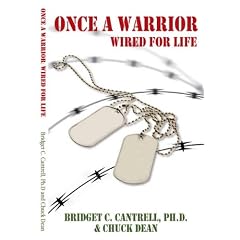
wired for life
Before I deployed down range I was different around my wife and kids. Now that I'm back I can only let them get so close before I have to get away. I used to have fun letting my boys jump and crawl all over me. We would spend hours playing like that... Now I can only take a couple of minutes of this before I have to get out. I usually get in my truck and drive back to base to be with my platoon...
A young sergeant paratrooper with 173 Airborne Brigade
Page 33 of "Once a Warrior: Wired for Life" by Cantrell and Dean
The young sergeant referred to here in the book was confused. He loved the energy of his kids before Iraq but after deploying, but now the high energy of his kids sent him over the edge. In Iraq he was 'wired tight' and was able to keep cool, to predict, endure, had greater tolerance levels... and when he came home he found that he was easily knocked off balance. He felt like a failure and he was afraid of the person he had become.
In this chapter, Chuck, a Vietnam vet, tells of his own emotional distancing when he got back from Vietnam. In the military we use the term 'the wire' to refer to the perimeter. It is a powerful symbol for us. For computer programers another symbol of protection and security might be a firewall, for others... a shield. We had our 'wire'.
Inside the wire we could let our guard down a little bit, though not really because there is always the incoming mortar attack. What can you do when mortars hit? How many times have I heard someone say "no use running... you might run to where they are landing". Many of us simply resolved to let the mortars 'fall where they may'. When my platoon, which operated on FOB Volunteer (the Old Iraqi Olympic Stadium a few blocks from Sadr City) would visit a large major base and happenstance occurs that the base is mortared, we'd shrug our shoulders and sit in our humveess while everyone around ran for bunkers during mortar attacks.
One time, as I was in the motor pool checking on a broken rig, my squad of three guys, had driven to the small chow hall to pick up a food delivery for some soldiers that lived at an Iraqi Army post. They moved their rig from one spot to another. Then a mortar attack and one of the mortars came close to where they had just been parked. This was proof positive for everyone that you can't plan to go anywhere, just go where you go and let the cards fall where they may.
However, outside the wire is a different story. Outside the wire one is on guard all the time. Even if you are on patrol and have to hole up for a while and you want to get sleep, you leave lots of wakeful eyes with fingers on triggers to keep watch. Outside the wire you are all business. Inside the wire, not so much.
Whenever I had guard duty at the front gate I would sometimes walk outside the front gate. I was alone, the rest of the guards were inside the gate and talking about women or football or whatever. I would go outside the front gate and lean against the wall. The night would be quiet and I'd reflect on the noticeable change in my nature with just a few steps. Subtle, but different.
This chapter in the book suggests that our new wire is a mental one. We've seen some pretty fucked up shit. How do you cope? You make a wall. You make a wire. Inside you are okay, outside is the threat. The building of this wire is normal. It has different forms. I trained as an EMT and a firefighter and came into contact with Emergency Room doctors and nurses and paramedics and firefighters who daily saw heartbreaking ordeals. To cope they developed a dark humor, making jests and poking fun of things that others not in their line of work would consider morbid or disrespectful. The people who did these jobs were very respectful of human life, but they needed means of coping with the loss around them. We too have seen destroyed bodies and homes. We've seen what is left of a busy intersection when a carbomb goes off. We've seen the result of our own shots. We too must cope, and so we build our 'wire'.
A new theory of dreams
I am not a sleep specialist, but I do know that getting enough sleep is a very important part to healing the mind from traumatic experiences. I would speculate that we have inherent qualities within us, a natural resiliency and 'human' tendencies (interpret as you wish) that, if given REM sleep can test out the damaged schemas of the non-REM sleep, discarding them over a period of time until we cull the maladaptive schemas.
Interesting video.
Major General Smedley D. Butler
Boys with a normal viewpoint were taken from the fields and offices and factories and classrooms and put into the ranks. There they were remolded; they were made over; they were made to 'about face', to regard murder as the order of the day. They were put shoulder to shoulder, and through mass psychology they were entirely changed. We used them for a couple of years and trained them to think nothing at all of killing or of being killed. Then suddenly, we dishcharged them and told them to make another 'about face'. This tiem they had to do their own readjusting without mass psychology, without officers' aid and advice, withou nation-wide propaganda. We didn't need them anymore. So we scattered them about without any speeches or parades. Many, too many, of these find young boys are eventually destroyed mentally, because they could not make that final 'about face' alone."
(written between WWI and WWII...)
Smedley D. Butler,
Major General, USMC
1936
Two-time winner, Congressional Medal of Honor
Tuesday, January 27, 2009
Monday, January 26, 2009
From 2000 to 2006, 1,066 male veterans in Oregon took their lives.
I am tired and sleepy and have spent a couple of hours roaming through various books on vets issues and am trying to wrap my mind around things in order to pull some of my weight at work on this research project. At the end of this bout I am about to shut down and go to bed. Before I do I scan the headlines of some news feeds. One of them gets my attention and I read the first paragraph and it brings me to tears.
Retired Oregon National Guard Major Tom Egan died of exposure in Eugene, homeless, with a liquor bottle by his side. Yet he had friends, including members of the National Guard.
Another story listed a statistic that I knew was high but still shocks me whenever I see it.
From 2000 to 2006, 1,066 male veterans in Oregon took their lives. There have been as many Iraq-Afghanistan veteran suicides in Oregon as Oregonians have been killed in theater. Do the math, in 72 months that is almost four suicides per week for six years!
I am not doing enough. I waste too much time. I weep for my lost brothers in arms. I've let them down. Whether they died from their own hands or they froze to death... I let them down.
I am sorry.
Retired Oregon National Guard Major Tom Egan died of exposure in Eugene, homeless, with a liquor bottle by his side. Yet he had friends, including members of the National Guard.
Another story listed a statistic that I knew was high but still shocks me whenever I see it.
From 2000 to 2006, 1,066 male veterans in Oregon took their lives. There have been as many Iraq-Afghanistan veteran suicides in Oregon as Oregonians have been killed in theater. Do the math, in 72 months that is almost four suicides per week for six years!
I am not doing enough. I waste too much time. I weep for my lost brothers in arms. I've let them down. Whether they died from their own hands or they froze to death... I let them down.
I am sorry.
Birth of a Soul
On page 110 of Edward Tick's book War and the Soul is a powerful testimony from a Marine Vietnam veteran.
I laid my gun across my legs and, while the Vietnamese family stared at me without daring to move, I stared out the door of their hut.
That doorway was like a picture frame on the world... like I was staring out trough God's eyes. The men I fought with, the "good guys, yelled like idiots and pushed these little people around. I watched my buddies walk over to the hut right across from me... and torch it. I looked at the family cowering in fear by my side. I looked across the way at my friend, the good guy, and another terrified mamasan... the flames destroy[ing] her home.
Something woke up in me. God and evil. Honor and dishon0r. Right and wrong. These had been automatic concepts... but at that moment.... they were real, living things. You earned them by torturing yourself with questions until you really knew what was right and good and honorable, not because someone told you, but because you saw.
I watched my buddies burn another hut... they weren't gooks, for God's sak!.. They were a helpless mother and her terrified little children! After six months in the bush I saw them for the first time... they weren't evil. They weren't the enemies. They weren't the bad guys. We were!
Everything was turned around. I wanted to raise my M-16 and blast away at these crazy marauding Americans who were wasting this helpless village. Now I had a soul, and I wanted to blast away at these crazy marauding Americans who were wasting this helpless village. Now I had soul, and I wanted to save it an these people by doing the right thing and defending them, even if i cost me my life.
I just walked off in a stupor while they... torched the hut. My hut with my family in it. Where I found my soul. Where I figured out the truth. I was in a daze for a long time. Then I went numb for the rest of my tour.
At the very moment I found my soul, at the very moment it woke up and I could see the truth for the first time in my life, at that very second when I knew we were evil, it fled, I lost it.
Sunday, January 25, 2009
John Stewart Mill Quote
"War is an ugly thing, but not the ugliest of things. The decayed and degraded state of moral and patriotic feelings, which thinks that nothing is worth war, is much worse. The person who has nothing for which he is willing to fight, nothing, which is more important than his own personal safety, is a miserable creature and has no chance of being free unless made and kept so by the exertions of better men than him."
-- John Stewart Mill (1806-1873)
Introduction video from Eddie on PTSD
video 1 part 1. Eddie talks about joining the military
Video 1 part 2. Eddie talks briefly about being new in Iraq.
Video 1 part 3. Eddie briefly talks about ramificatios of PTSD on returning troops.
Subscribe to:
Posts (Atom)


 Posts
Posts


